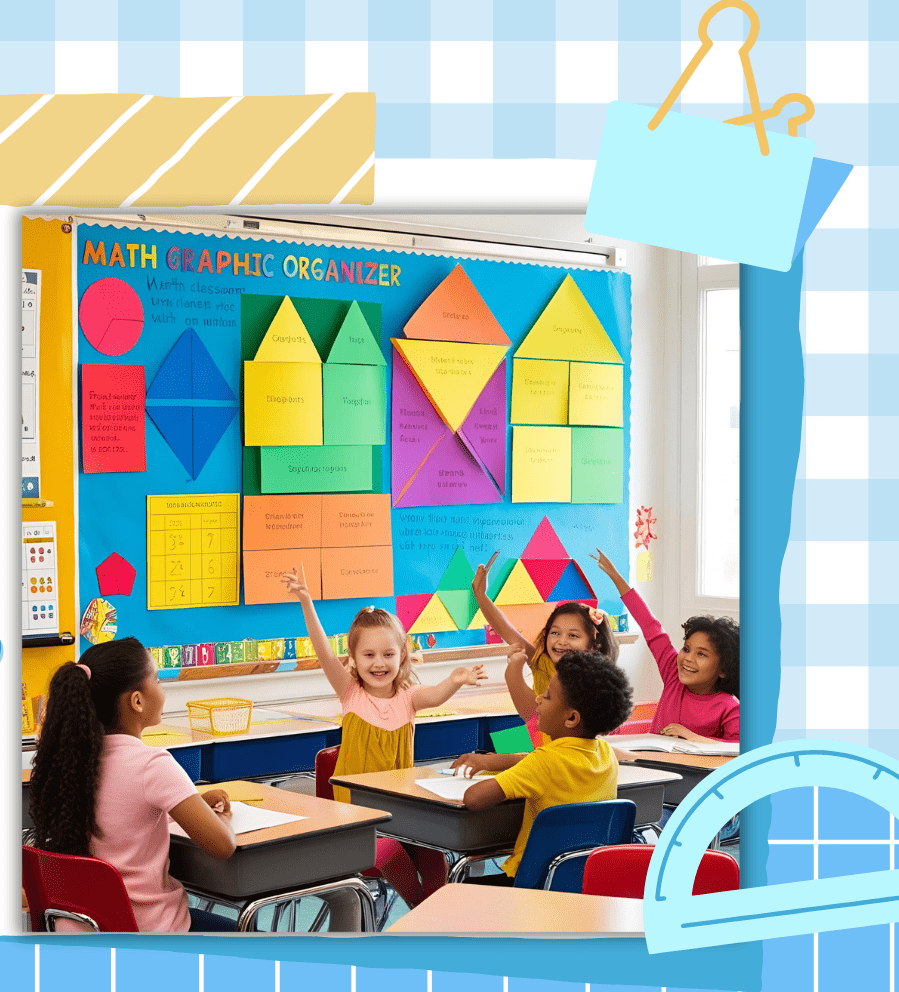
The Power of Visual Representations: Enhancing Mathematical Comprehension for Diverse Learners

Mathematics is often perceived as abstract and complex, causing many students to struggle. Research indicates that a significant number of students experiences difficulties understanding mathematical ideas presented solely through symbolic notation. Visual representations bridge this gap, making abstract concepts more accessible and meaningful. Visual representations, including diagrams, models, and digital simulations, play a crucial role […]


Beyond the Basics: Exploring Key Elements of Mathematical Provocations (Part 2)

In my previous article, I explored the power of mathematical provocations—open-ended challenges designed to spark curiosity and deeper learning—focusing on key elements like Cognitive Disequilibrium and Low-Floor, High-Ceiling tasks. This article builds on that foundation, highlighting three additional elements essential for effective mathematical provocations. Connecting to Big Ideas What if students saw mathematics as more […]

Unlocking Active Learning’s Potential: 4 Common Misconceptions and How to Overcome Them

Engaging students and boosting learning outcomes: these are the promises of active learning, a method gaining traction in education circles. Despite its popularity, misconceptions about implementing active learning persist, often leading to practices that fall short of its potential. This article explores common misunderstandings about active learning, particularly in Early Years’ classes, and offers insights […]

Building a Culture of Thinking with Visible Thinking Routines

Stepping into a recent professional development session, I eagerly anticipated diving deep into the world of Active Learning. My plan? To emerge armed with a comprehensive understanding of this multifaceted approach. However, as the session unfolded, a pre-evaluation of our knowledge revealed a fascinating truth: teachers yearned for specific guidance on one crucial aspect – […]